Gum disease treatment in Toowoomba
Gums that bleed when you brush, breath that won't freshen, teeth that feel a little loose — these are usually signs of gum disease, and the earlier it's treated, the simpler that treatment is. Whatever stage yours is at, you'll get honest, judgement-free care here.
Signs of gum disease
Gum disease is common — and easy to ignore, because it's rarely painful in its early stages. These are the signs patients most often mention:
- Gums that bleed when you brush or floss
- Red, swollen or tender gums
- Bad breath that doesn't go away with brushing or mouthwash
- Gums pulling away from the teeth, making teeth look longer
- A persistent bad taste
- Teeth that feel loose, or a change in how your bite fits together
- Discomfort when chewing
Bleeding when you brush is not normal, even if it's been happening for years. It's your gums telling you something — and it's one of the easiest warning signs to act on early.
What tartar build-up actually looks like
These photographs show the tongue side of the lower front teeth — the spot where hardened plaque (tartar, or calculus) builds up fastest, because a salivary gland opens right behind those teeth. It's also the one part of your mouth you never see in the mirror, which is a large part of why gum disease so often develops unnoticed.
Before — tartar along the gumline
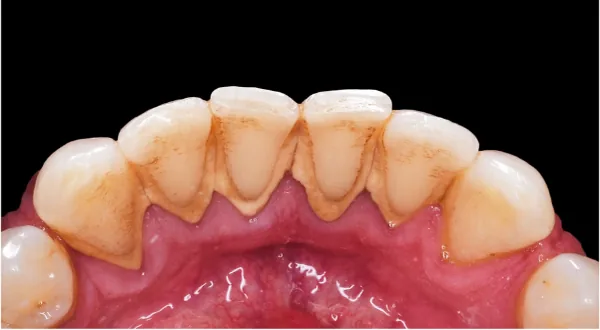
Hard deposits have collected where the gums meet the teeth, and the gum margins are red and swollen in response. Tartar can't be brushed or flossed away once it hardens — it has to be removed professionally.
After — a professional scale and clean
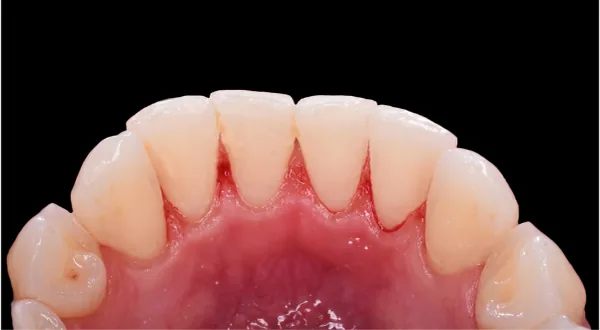
The same teeth with the deposits removed. The gums are still a little pink and tender here — inflamed gums usually take a couple of weeks of consistent home care to settle down properly after a clean.
Gingivitis and periodontitis — what's the difference?
Gingivitis
The early stage. Plaque building up along the gumline irritates the gums, making them red, puffy and quick to bleed. At this stage the bone supporting your teeth hasn't been affected, and with professional cleaning and good home care, gingivitis is usually reversible.
Periodontitis
If gingivitis is left untreated, the inflammation can spread below the gumline. Pockets form between the gums and teeth, and the bone that holds your teeth in place can gradually be lost. Bone that has been lost doesn't grow back — which is why our focus with periodontitis is to stop the disease progressing and stabilise what you have. Managed well, many people keep their teeth for life.
We'd rather be straight with you: no treatment can promise to reverse periodontitis. What treatment is designed to do is halt the damage — and that genuinely works best the earlier it starts.
How we treat gum disease
- Gum assessment. We measure the spaces around each tooth, check for bleeding and recession, and take any X-rays needed to see the bone. This tells us exactly what stage things are at — no guesswork.
- Professional cleaning. For gingivitis, a thorough scale and clean removes the plaque and tartar driving the inflammation.
- Deep cleaning below the gumline. For periodontitis, we clean the root surfaces beneath the gums — known as scaling and root planing — usually over more than one visit, taken gently and at your pace. Tell us if you're tender or nervous and we'll plan your comfort around it.
- Home care that actually fits you. Daily cleaning is half the treatment. We show you techniques and tools matched to your mouth, without lectures.
- Maintenance visits. Gum disease is managed, not cured — regular maintenance appointments keep the bacteria from re-establishing and let us catch any changes early.
If your gum condition ever needs care beyond what we provide, we'll tell you honestly and arrange the right referral.
Been avoiding the dentist? You're exactly who we're here for
Many people with gum disease have put off dental visits for years — often because they're worried about being judged for it. You won't be. Supporting anxious and long-absent patients is something we take real pride in: no lectures, no guilt, just a clear picture of where things stand and a plan to move forward from there.
What does gum treatment cost?
The cost depends entirely on what your gum assessment finds — treating early gingivitis is very different from managing established periodontitis. That's why we quote after your assessment, in writing, with every cost explained before any treatment begins.
New patients can start with our $199 new patient offer, which includes the comprehensive examination, a scale and clean, X-rays and a personalised treatment plan — a natural first step if you're worried about your gums. Payment plans from $20 a week are available, and you can see how our fees work on the pricing guide.
Frequently asked questions
Is it normal for gums to bleed when brushing?
No. Healthy gums don't bleed with normal brushing or flossing. Bleeding usually means the gums are inflamed — most often from plaque along the gumline — and it's worth having checked, even if it doesn't hurt.
Why can't I just brush the tartar off myself?
Plaque is soft and brushing removes it. If plaque is left in place, minerals in your saliva harden it into tartar (calculus) within a couple of days, and once hardened it's bonded to the tooth — a toothbrush, floss or whitening toothpaste won't shift it. It needs to be removed with dental instruments, which is what a scale and clean does. Because tartar has a rough surface that collects more plaque, leaving it there keeps the gums inflamed.
Can gum disease be cured?
Gingivitis, the early stage, is usually reversible with professional cleaning and good daily home care. Periodontitis can't be reversed — lost bone doesn't grow back — but it can be managed and stabilised, and with ongoing care many people keep their teeth for life.
Does deep cleaning hurt?
Gums that are inflamed can be tender, so we take it gently, work at your pace, and talk through the options for keeping you comfortable before we start. Most patients find it far more manageable than they expected — and gums typically feel healthier within a couple of weeks.
How many visits will I need?
It depends on what your assessment finds. Early gum disease may be addressed alongside a regular clean; deep cleaning for periodontitis is usually spread over more than one visit, followed by a review and then regular maintenance appointments. You'll know the full plan, and its cost, before anything begins.
Will my health fund cover gum treatment?
Most extras policies contribute towards periodontal treatment, but cover varies between funds and levels. Once your treatment plan is prepared, we can give you the item numbers to quote to your fund — or run a quote through HICAPS for you at reception.
Can gum disease affect my general health?
Research links periodontitis with a number of general health conditions, including diabetes and cardiovascular disease, and gum treatment is an important part of overall health care. If you have a condition like diabetes, let us know — it's relevant to how we plan your gum care.
Worried about your gums?
The best time to act on bleeding gums was when it started; the second-best time is now. Book online or call us — and if it's been a while since your last visit, that's completely fine.
Related: Check-up & clean · Dental anxiety care · $199 new patient offer · Pricing